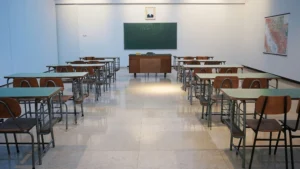
When classroom speech sounds loud but indistinct, investigate the room’s reflections before adding more gain. Hard walls, glass, floors, and ceilings can return sound after the direct voice reaches listeners. Those overlapping arrivals make words harder to separate and give microphones more room sound to capture. Useful treatment reduces unwanted reflected energy while preserving a practical teaching space.
Begin with a listening survey and a description of the actual problem. A room that sounds lively during conversation presents a different task from a room where a single speaker causes a distinct slap from the rear wall. Acoustic treatment should address that evidence, with facilities and an acoustics professional involved where the room or proposed work warrants it.
Distinguish the room from the audio system
Listen first with the amplification off. Have someone speak naturally from the normal teaching position while another person listens at several student seats. If words already blur in the unamplified room, the electronics are unlikely to be the only cause. Repeat with the usual audio setup and compare what changes.
Separate reverberation from other complaints. A steady background noise, an electrical hum, a delayed remote voice, and a strong wall reflection need different investigations. Describe what listeners hear and when it occurs rather than recording every issue as poor acoustics. This article concerns sound reflecting within the teaching room, not sound isolation between neighboring rooms.
A handclap can reveal an obvious reflection, but it is not a substitute for a measured assessment. Do not turn a casual listening check into an unsupported performance specification. If acceptance depends on a defined acoustic result, have the relevant professional establish the measurement method, room conditions, and target before work begins.
Identify the surfaces that matter
Map the room’s major hard surfaces and existing absorptive areas. A large bare rear wall, parallel side walls, or an exposed structural ceiling may deserve investigation. Note how desks, storage, and teaching boards limit the available treatment locations. The useful question is where treatment can affect the troublesome sound paths while remaining compatible with the room’s daily use.
Avoid assuming that any soft object provides the required treatment. Thin decorative material may have limited effect on the frequencies causing the complaint. Product appearance alone does not establish acoustic performance. Ask for appropriate test information and installation guidance, and have the proposal assessed as a room treatment rather than a selection of attractive wall finishes.
Occupancy matters as well. People and furnishings change the acoustic environment, so an empty-room demonstration may not describe a normal lesson. Record whether the complaint occurs in small seminars, full classes, or both. Where practical, compare representative occupied conditions and make the acceptance test reflect the use that matters.
Plan wall treatment around teaching use
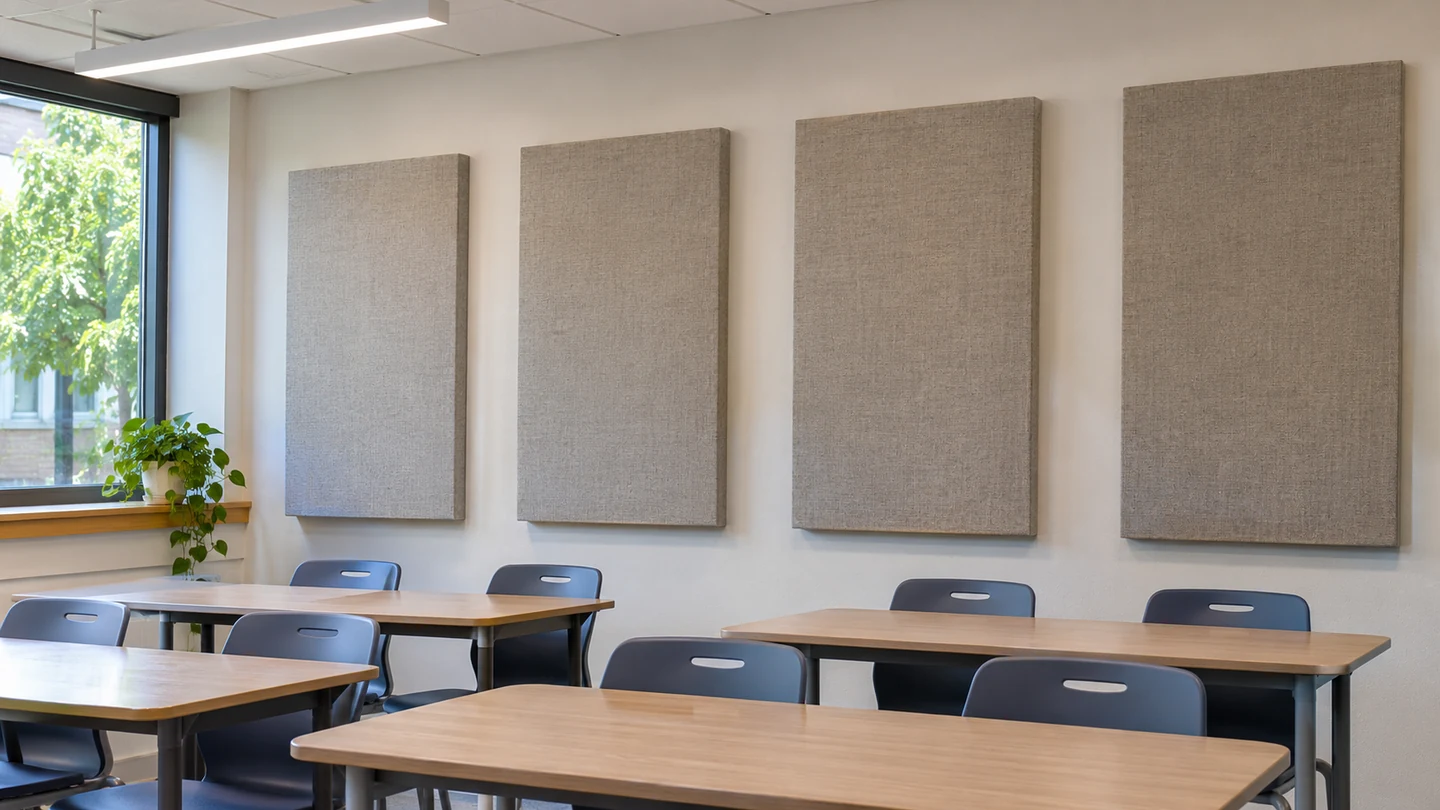
Wall panels can be practical where a room has suitable exposed areas and a clear reflected-sound problem. Coordinate their positions with writing boards, storage, displays, and circulation. Keep panels away from locations where furniture repeatedly strikes them or where they prevent routine access to equipment. A treatment that is damaged or removed during normal use will not remain effective.
Consider durability and cleaning alongside acoustic performance. Schools need finishes that facilities can maintain using the approved methods. Ask how damaged covers or panels are replaced and whether the installation can remain serviceable over time. Do not apply an unapproved coating or cover that could change the product’s behavior.
Mounting is part of the design. Panels need suitable support, and their installed arrangement should follow the relevant instructions. Coordinate work with facilities rather than attaching improvised materials above occupied areas. Any requirements associated with the building’s finishes or installation process should be handled by the people responsible for that work.
Review the ceiling as a system
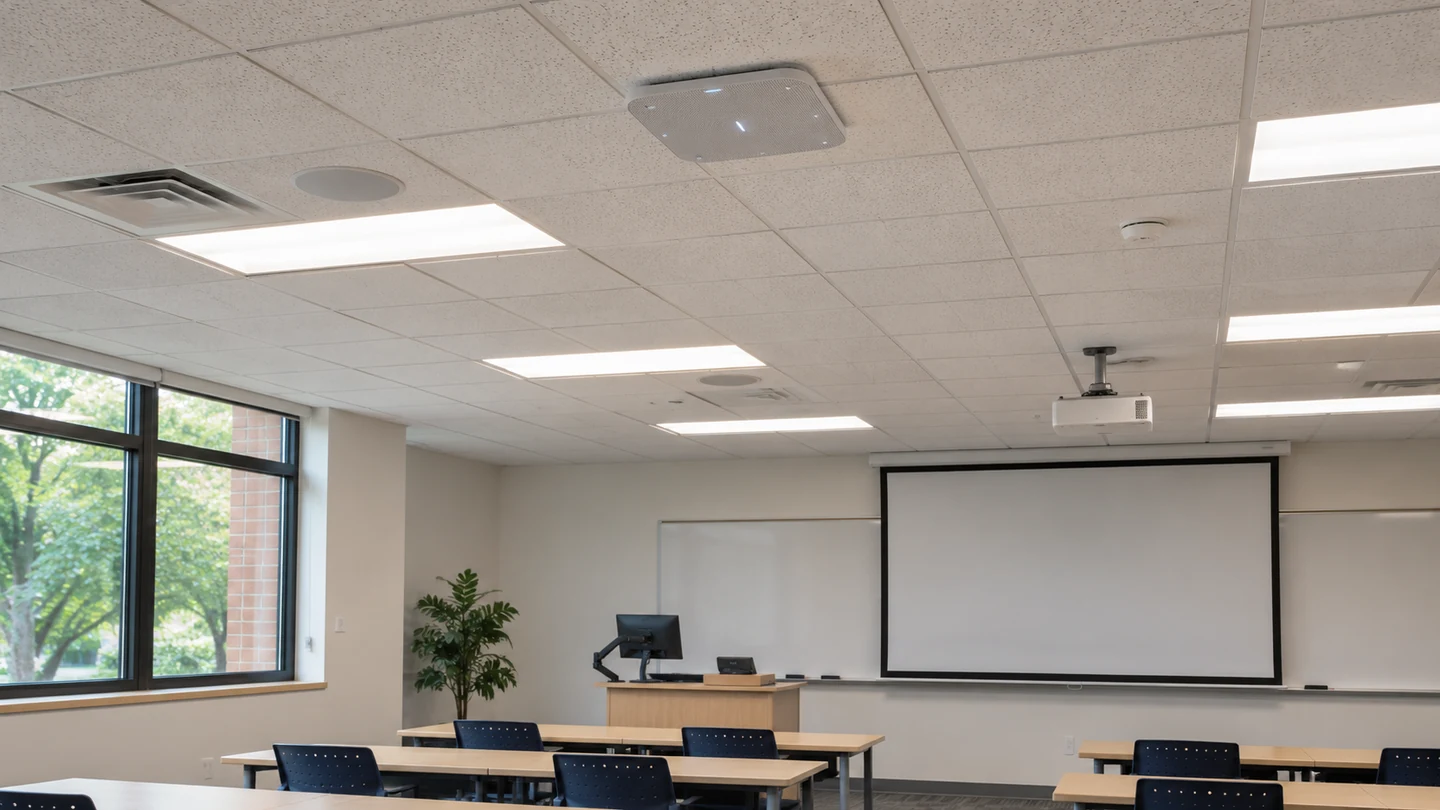
A ceiling can offer a substantial treatment area, but it also contains lighting, ventilation, speakers, microphones, and service access. Replacing or adding acoustic elements should be coordinated with those systems. Do not block an access point or alter a suspended ceiling’s support arrangement merely to fit a treatment pattern.
Where the room has an exposed ceiling, suspended absorbers may be considered through a properly designed installation. Their location and support need professional attention. The objective is not simply to hang material above desks; it is to provide useful absorption without compromising lighting distribution, equipment operation, maintenance, or the intended room layout.
Keep a record of the chosen products and their locations. Future maintenance can otherwise replace an acoustic tile with a visually similar but different product. A room drawing and a short materials record help facilities preserve the installed treatment when services are changed or ceiling elements are removed for access.
Understand what treatment changes for microphones
A microphone captures a mixture of desired speech, reflected speech, and other room sound. Reducing troublesome reflections can improve that mixture, especially where a ceiling microphone must cover a wider area. Treatment does not remove the need for appropriate microphone placement, gain structure, or suitable processing. It improves the environment in which those choices operate.
Do not move a microphone or raise its gain at the same time as a treatment trial unless the test is designed to separate those changes. Otherwise the result will be difficult to explain. Use a consistent speaking position and compare the same listening points or recordings. The separate guide to microphone placement mistakes addresses location problems in more detail.
For hybrid teaching, include a remote listener in the test. The local room may sound acceptable while the transmitted signal remains distant or reverberant. Ask the remote listener to compare ordinary speech from the teaching position and common student contribution points. Keep conferencing settings consistent so the comparison concerns the room change rather than different application behavior.
Recommission speakers after the room changes
Treatment can alter how the installed speakers interact with the room. Recheck coverage and normal operating levels after the work is complete. Do not assume the previous equalization and gain settings remain the best starting point. Use the classroom audio optimization guidance to organize the electronic adjustments after the physical environment has been addressed.
More loudness is not a reliable cure for blurred speech. Raising the system can also send more energy into reflective surfaces. Check whether every seating area receives useful direct sound from the speakers and whether particular zones are excessively loud. The speaker and amplification guide covers the wider system choices without treating treatment as a replacement for good coverage.
Test the outcome and preserve it
Before approving the work, repeat the original speech tasks from the same positions. Include normal amplification, a lesson recording, and a remote call if those uses prompted the project. Record subjective findings clearly and keep any professional measurement report with the room documentation. Avoid claiming a numerical improvement that was never measured.
Explain the result to staff in practical terms: the room treatment supports clearer speech, while the normal microphone and speaker routine still matters. Preserve the panel and ceiling layout during future furniture or service changes. For the broader relationship between room acoustics and electronics, use the classroom audio guide alongside the room’s own commissioning record.
Where a small treatment trial is practical, agree in advance how it will be judged. Use the same speech material, listening positions, and room arrangement before and after. Record whether doors are open and whether the room is occupied. This keeps a useful local observation from becoming an unsupported claim about every classroom. If the result is ambiguous, obtain a professional assessment before committing to a larger installation.