
Table of Contents
Clear audio is often taken for granted in classrooms—until problems arise.
Echo, uneven volume, feedback noise, and unclear speech are common issues that stem from poor classroom speakers and amplification planning. In modern learning environments that rely on multimedia content and hybrid participation, sound clarity is not a luxury; it is infrastructure.
Understanding what truly matters in classroom speakers and amplification helps schools avoid common deployment mistakes and design audio systems that support long-term teaching effectiveness.
Audio quality is not determined by speaker size alone. It depends on coverage design, amplifier configuration, room acoustics, and system integration.
Why Classroom Speakers & Amplification Matter More Than Volume
Many institutions mistakenly assume that louder speakers solve classroom audio problems.
In reality, classroom speakers and amplification systems must prioritize clarity and coverage consistency rather than raw loudness.
Speech Intelligibility Over Raw Sound Pressure
Classroom audio systems are primarily designed for speech reinforcement.
Speech intelligibility depends on:
- Even sound distribution
- Controlled reverberation
- Proper gain structure
- Balanced frequency response
A poorly designed classroom amplification system may produce high volume levels while still making speech difficult to understand.
The goal is uniform intelligibility from the front row to the back of the room.
Coverage Consistency Across the Room
Uneven sound distribution is one of the most common classroom audio issues.
If speakers are mounted only at the front of the room, students seated at the back may experience lower clarity due to distance and reverberation.
Well-designed classroom speakers and amplification systems account for:
Room size
Ceiling height
Student seating distribution
Wall and floor materials
Distributed speaker layouts often outperform single high-powered front speakers in maintaining consistent coverage.
Types of Classroom Speakers
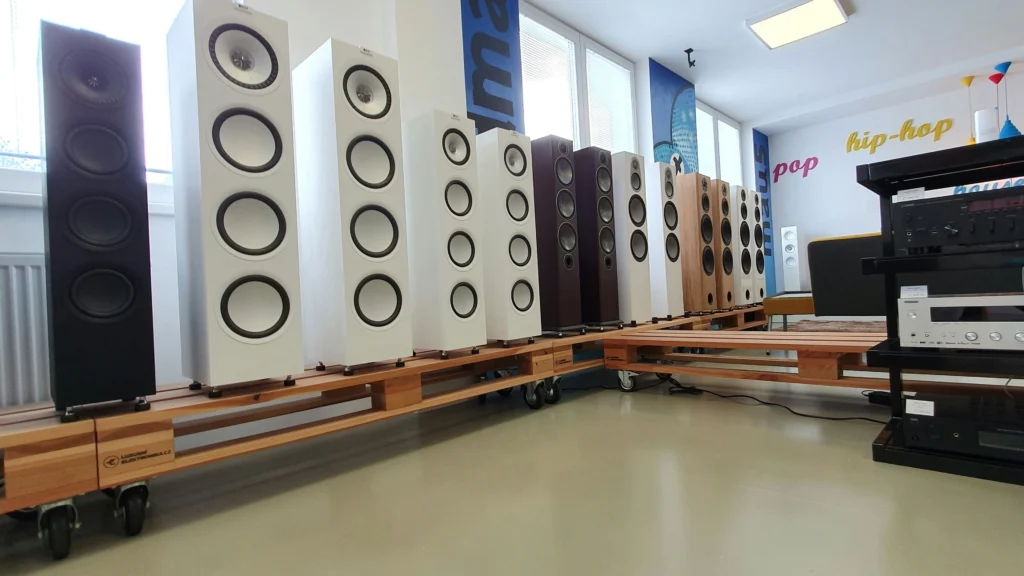
Selecting appropriate classroom speakers requires understanding installation type and power configuration.
Not all classroom speaker systems are built the same, and placement significantly affects performance.
Powered vs Passive Classroom Speakers
Powered speakers contain built-in amplification, while passive speakers require an external amplifier.
Powered classroom speakers simplify installation in smaller rooms because they reduce rack equipment needs.
Passive classroom speaker systems, however, allow centralized amplifier control and are often preferred in larger installations.
The choice affects:
- Maintenance strategy
- Scalability
- Cable routing
- Power distribution planning
In larger smart classroom deployments, passive systems connected to centralized amplification may offer better long-term control.
Ceiling-Mounted vs Wall-Mounted Speakers
Speaker placement shapes sound dispersion.
Ceiling-mounted classroom speakers distribute sound more evenly in rectangular rooms and reduce front-heavy audio concentration.
Wall-mounted speakers are easier to service but may create directional imbalance if not carefully angled.
In classrooms with hybrid audio capture systems, speaker placement must also consider microphone positioning to avoid feedback loops.
Classroom Audio Pickup: Microphones, Arrays, and Mistakes
Proper coordination between pickup and amplification prevents common acoustic problems.
Amplification Architecture: The Backbone of Classroom Audio
When evaluating classroom speakers and amplification, many decision-makers focus on speaker models while overlooking amplification architecture.
In reality, amplification strategy determines stability, scalability, and long-term performance.
Speakers reproduce sound.
Amplifiers shape and control it.
Without properly matched amplification, even high-quality classroom speaker systems will underperform.
Distributed Amplification vs Centralized Amplification
Two primary design models dominate classroom sound system planning: distributed amplification and centralized amplification.
In distributed systems, powered speakers or localized amplifiers are installed within each classroom. This approach reduces long cable runs and simplifies deployment in smaller institutions.
In centralized systems, passive classroom speakers connect to rack-mounted amplifiers located in equipment rooms or AV cabinets. This design enables centralized management and standardized gain structure across multiple classrooms.
The choice between distributed and centralized classroom amplification systems affects:
- Maintenance workflow
- Power load planning
- Upgrade flexibility
- Signal routing complexity
In multi-classroom campuses, centralized amplification often aligns better with IT standardization goals.
However, for small schools or single-room upgrades, distributed amplification may offer cost and installation efficiency.
Gain Structure and Signal Flow
One of the most overlooked aspects of classroom speakers and amplification is gain structure management.
Gain staging determines how audio signals move from microphone input to final speaker output. Improper gain configuration leads to distortion, noise floor issues, or feedback.
In a typical classroom audio system:
Microphone → Mixer or DSP → Amplifier → Speakers
Each stage must be calibrated to avoid signal clipping or excessive noise.
Over-amplifying early in the signal chain increases distortion. Over-amplifying at the final stage increases feedback risk.
Well-designed classroom amplification systems maintain balanced signal levels throughout the chain, ensuring speech remains clear without pushing the system to its limits.
DSP Integration and Acoustic Control
As classrooms adopt hybrid learning models, digital signal processing (DSP) becomes increasingly important.
Modern classroom speakers and amplification systems often integrate with DSP units that manage:
- Equalization
- Feedback suppression
- Automatic gain control
- Echo cancellation
DSP allows fine-tuning based on room acoustics.
Hard surfaces such as tile floors and concrete walls increase reverberation. Without proper equalization and delay compensation, speech clarity deteriorates.
In distributed speaker layouts, delay alignment ensures that sound from different speakers reaches listeners simultaneously, preventing echo perception.
DSP integration transforms classroom amplification from simple volume boosting into controlled acoustic shaping.
Feedback Prevention: Coordination Between Pickup and Output
Audio feedback is one of the most disruptive classroom issues.
Feedback occurs when microphone pickup re-enters speakers and is re-amplified in a loop.
Proper classroom speakers and amplification design minimizes this risk through:
- Strategic speaker placement
- Controlled microphone positioning
- Balanced gain staging
- DSP-based feedback suppression
Ceiling-mounted speakers paired with ceiling microphone arrays require careful acoustic zoning to prevent overlapping pickup patterns.
If amplification is increased without corresponding pickup adjustment, the system becomes unstable.
This is why classroom speakers and amplification planning must always coordinate with audio pickup system design.
[Internal Link → Classroom Audio Pickup: Microphones, Arrays, and Mistakes]
Amplification cannot compensate for poorly positioned microphones.
Power Matching and Speaker Load Calculations
Another critical technical factor is impedance matching and amplifier load capacity.
Passive classroom speaker systems must be matched with amplifiers that support the correct impedance levels.
Improper matching can result in:
- Reduced output power
- Overheating
- Amplifier shutdown
- Component damage
In multi-speaker configurations, load calculations determine whether speakers should be wired in series, parallel, or through distributed 70V/100V systems.
Voltage-based distributed audio systems are common in educational environments because they allow multiple speakers to connect across longer cable runs without excessive power loss.
Understanding these electrical considerations ensures classroom amplification systems remain stable under continuous use.
Acoustic Environment Considerations
Classroom speakers and amplification cannot be evaluated independently from room acoustics.
Rooms with high ceilings and reflective surfaces require different speaker dispersion patterns than carpeted rooms with acoustic panels.
Installing larger speakers does not correct poor acoustic design.
Instead, effective classroom sound systems balance:
- Speaker coverage angle
- Mounting height
- Surface absorption characteristics
- Student seating layout
In some cases, adding modest acoustic treatment yields greater intelligibility improvements than upgrading speaker hardware.
Audio clarity is an environmental outcome—not just a hardware specification.
Common Mistakes in Classroom Speakers and Amplification Design
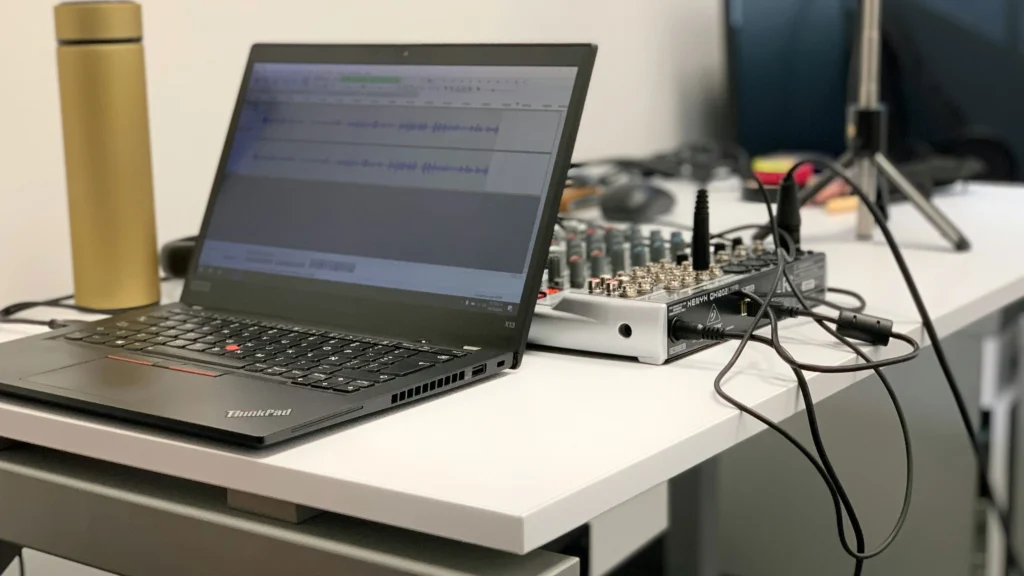
Even well-funded projects can fail when classroom audio planning lacks system thinking.
One of the most common mistakes is equating speaker size with performance. Larger speakers do not automatically deliver better intelligibility. In small or acoustically reflective classrooms, oversized front-mounted speakers often create uneven distribution and excessive front-row volume.
Another frequent issue is underestimating room acoustics. Installing high-quality classroom speakers and amplification equipment in a highly reverberant room will not solve clarity problems. Without acoustic consideration, amplified sound simply increases reflected noise.
A third mistake involves improper gain calibration. Schools sometimes increase amplifier output to compensate for unclear speech, inadvertently creating feedback loops or distortion. This approach treats symptoms rather than addressing root causes in signal flow or microphone placement.
Finally, fragmented planning between AV contractors and IT departments often leads to mismatched systems. Classroom amplification should align with network infrastructure, hybrid learning platforms, and digital podium integration rather than functioning as an isolated component.
Audio design must be systemic.
Small vs Medium vs Large Classroom Recommendations
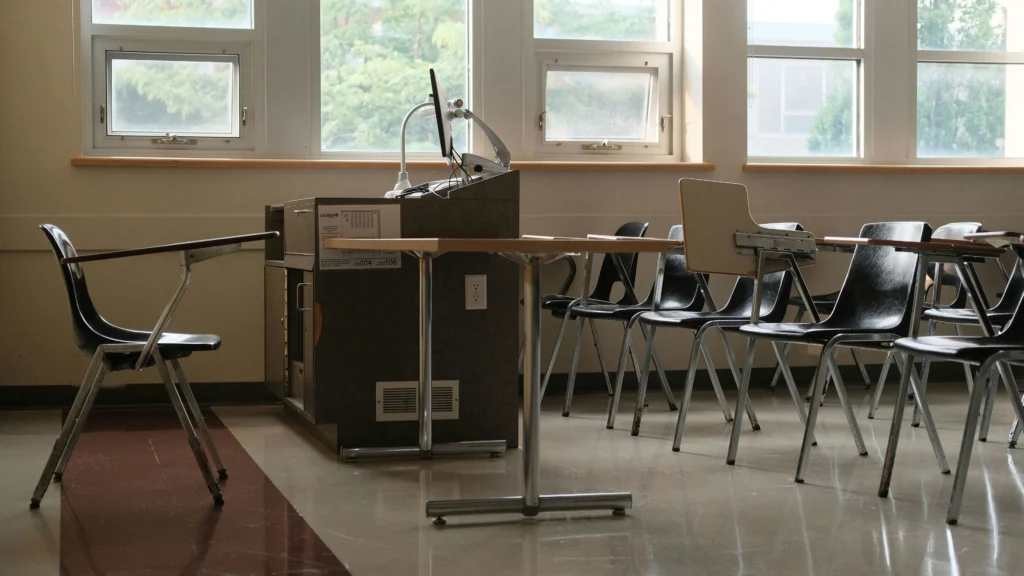
Classroom speakers and amplification strategies should scale according to room size and instructional complexity.
Small Classrooms
In rooms under 30 students, clarity and simplicity are priorities.
A distributed speaker layout with moderate amplification often provides sufficient coverage. Powered classroom speakers can simplify installation and reduce equipment rack requirements.
In small rooms, overengineering the system increases cost without significantly improving performance.
The goal is consistent speech reinforcement—not concert-level output.
Medium-Sized Classrooms
In medium classrooms, sound distribution becomes more complex.
Front-only speaker placement often leads to rear-row intelligibility issues. Distributed ceiling speakers paired with centralized amplification or DSP control typically yield better results.
At this scale, classroom speakers and amplification systems should integrate with:
- Microphone routing
- Digital podium control
- Display switching infrastructure
Coordination between components becomes essential.
Digital Podium Features and Practical Tips
Large Classrooms and Lecture Halls
In larger environments, amplification architecture becomes critical.
Multiple speaker zones, delay alignment, and advanced DSP tuning are often required to maintain intelligibility.
In these settings, classroom speakers and amplification systems function more like scaled-down auditorium systems.
Centralized amplification with professional DSP management provides greater control and long-term reliability.
Hybrid learning integration is also more demanding in large rooms, requiring coordinated management of local reinforcement and remote audio feeds.
Hybrid Learning and Audio Distribution
Hybrid classrooms introduce additional complexity.
In a traditional in-person classroom, amplification serves the physical audience. In hybrid environments, audio must serve both in-room listeners and remote participants.
This dual requirement means classroom speakers and amplification systems must coordinate with:
- Conferencing platforms
- Recording systems
- Echo cancellation processing
Improper routing can result in echo artifacts or audio latency during live sessions.
Well-designed systems separate reinforcement audio from recording feeds, ensuring both local and remote participants experience clear sound.
Hybrid learning elevates amplification design from simple reinforcement to multi-channel signal management.
Cost vs Long-Term Value
Budget constraints inevitably influence equipment selection.
However, reducing investment in classroom speakers and amplification often leads to recurring performance issues and future retrofit costs.
Low-cost speaker systems without proper amplification design may:
- Create uneven coverage
- Require frequent recalibration
- Fail under continuous daily use
Conversely, investing in scalable amplification architecture allows institutions to:
- Upgrade components incrementally
- Standardize maintenance processes
- Reduce troubleshooting time
The most cost-effective classroom audio systems are not the cheapest at purchase—but the most stable over time.
Final Perspective: Audio as Foundational Infrastructure
Classroom speakers and amplification should not be treated as accessories to visual technology.
Clear audio directly impacts:
- Student comprehension
- Instructor vocal fatigue
- Hybrid learning effectiveness
- Overall classroom engagement
Unlike visual equipment, audio problems are often subtle but cumulatively disruptive.
When designed thoughtfully, classroom amplification systems operate invisibly—supporting teaching without drawing attention to themselves.
When poorly designed, they become constant sources of distraction.
The difference lies in planning, calibration, and integration.
In modern smart classroom environments, audio is foundational infrastructure—not optional enhancement.