Table of Contents
When planning classroom infrastructure, podium selection is often underestimated. However, the decision between an electronic podium vs traditional podium can significantly impact teaching workflow, device integration, cable management, and long-term classroom scalability.
In modern learning environments where interactive displays, projectors, microphones, and networked systems coexist, the podium is no longer just a lectern. It becomes a control hub.
Understanding the structural and functional differences between an electronic podium vs traditional podium is essential for schools upgrading to smart classroom environments.
What Is a Traditional Podium?
A traditional podium is a standalone lectern designed primarily to support physical teaching materials such as printed notes, textbooks, or laptops.
It may include:
- A flat or angled writing surface
- Basic storage shelves
- Optional microphone mount
- Minimal cable routing
Traditional podiums do not typically include built-in AV integration. Devices such as projectors, microphones, and control panels must be installed separately.
In classrooms where technology infrastructure is limited, a traditional podium remains functional. However, as classrooms evolve toward integrated AV systems, its limitations become more evident.
Structural Characteristics of Traditional Podiums

Simplicity and Physical Design
Traditional podiums are typically constructed from wood, metal, or laminate materials. They are lightweight and movable in many cases.
Because they lack embedded electronics, they do not require:
- Dedicated power routing
- Network ports
- Ventilation for AV equipment
This simplicity reduces upfront cost but also limits expansion capability.
Limited Device Integration
In most cases, laptops placed on a traditional podium connect externally to classroom systems through wall ports or floor boxes.
This creates visible cable runs and increases dependency on external AV racks.
In classrooms equipped with centralized AV infrastructure, the traditional podium becomes a passive furniture element rather than an integrated control station.
What Is an Electronic Podium?
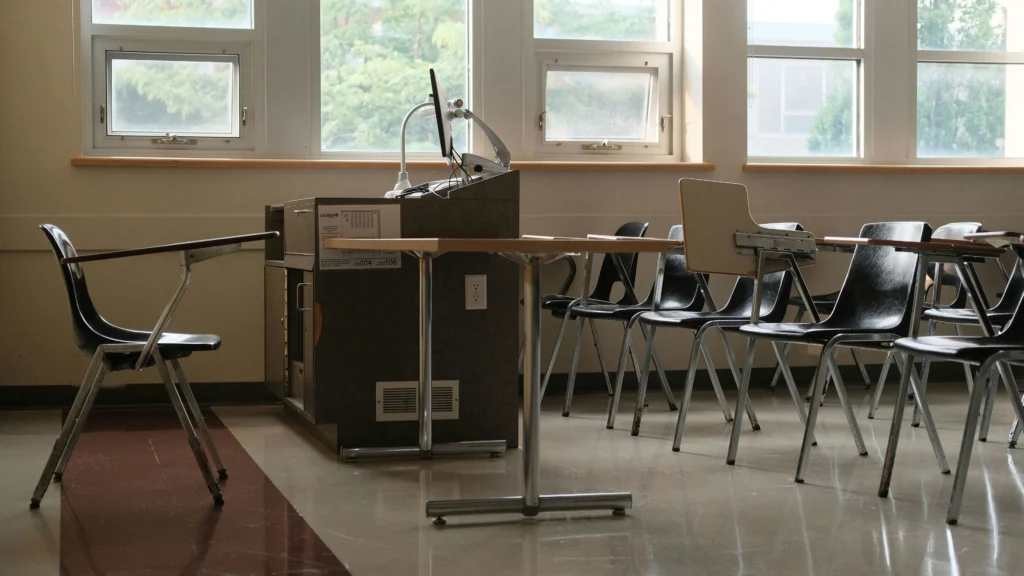
An electronic podium, sometimes referred to as a digital podium or smart classroom podium, is an integrated teaching console that houses AV control systems, connectivity ports, and computing components.
Unlike traditional lecterns, an electronic podium is designed as part of the classroom technology ecosystem.
The electronic podium vs traditional podium comparison becomes significant in environments that require:
- Interactive display control
- Projector switching
- Microphone management
- Network connectivity
- Secure equipment housing
Core Components of an Electronic Podium
Integrated AV Control
Most electronic podiums include:
- HDMI and USB input panels
- Control buttons or touch panels
- Audio routing interfaces
- Internal cable management
These features allow teachers to switch between devices without interacting directly with wall-mounted AV racks.
In classrooms with advanced systems, electronic podiums connect directly to DSP units and control processors.
👉 Smart Classroom Components: Complete Guide to AV, Control & Infrastructure Systems
Built-In Computing Options
Some electronic podium systems integrate:
- OPS modules
- Mini PCs
- Built-in Android systems
This eliminates the need for teachers to bring personal laptops for every session.
For schools standardizing classroom hardware, electronic podiums provide centralized computing control.
👉 OPS vs Built-in Android: What Powers Interactive Displays
Secure Equipment Housing
Electronic podiums often include lockable compartments for:
- Wireless microphone receivers
- Media players
- Network switches
- Control processors
This improves equipment security and reduces tampering risks in shared classroom environments.
Electronic Podium vs Traditional Podium: Functional Differences
The fundamental difference in the electronic podium vs traditional podium comparison lies in system integration.
A traditional podium functions as furniture.
An electronic podium functions as infrastructure.
This distinction influences teaching efficiency, installation complexity, and long-term scalability.
Teaching Workflow Efficiency

With a traditional podium, instructors may need to:
- Connect cables manually
- Walk to wall panels
- Switch projector inputs separately
An electronic podium centralizes these functions into one interface.
For teachers managing hybrid lessons or multimedia presentations, centralized control reduces friction and transition time between teaching modes.
Cable Management and Safety
Cable clutter is a common issue in technology-equipped classrooms.
Traditional podiums often result in exposed power strips, HDMI cables, and extension cords.
Electronic podiums typically include internal cable routing channels, reducing:
- Trip hazards
- Signal interference
- Visual clutter
This improves both safety compliance and aesthetic consistency.
Installation Complexity: Electronic Podium vs Traditional Podium
When comparing electronic podium vs traditional podium from an installation perspective, the differences extend beyond furniture placement. The complexity shifts from carpentry to infrastructure engineering.
A traditional podium requires minimal installation. It is typically placed in position and used immediately. No dedicated wiring, structural reinforcement, or system integration is required unless external devices are added.
An electronic podium, however, functions as a technology hub. Its installation involves coordination with AV systems, network infrastructure, and power distribution.
Structural and Mounting Requirements
Traditional Podium Installation
Traditional podium installation generally involves:
- Positioning the unit at the front of the classroom
- Securing it if required
- Providing nearby power outlets for laptops
Because it does not house AV electronics, ventilation and thermal management are not concerns.
This simplicity makes traditional podiums attractive in retrofit classrooms where infrastructure upgrades are limited.
Electronic Podium Installation
In contrast, installing an electronic podium may require:
- Dedicated electrical circuits
- Structured cabling to AV racks
- Network connections
- Integration with classroom control systems
If the podium includes built-in computing or AV switching modules, proper grounding and surge protection become essential.
Electronic podium vs traditional podium decisions often hinge on whether the classroom already has integrated AV infrastructure.
In smart classroom deployments, the electronic podium is typically designed in parallel with network and control systems.
Power and Electrical Considerations
Power planning is often overlooked in podium comparisons.
Traditional Podium Power Use
Traditional podiums typically rely on:
- Standard wall outlets
- Portable power strips
There is no centralized power management.
This setup works in low-tech classrooms but can create cable clutter when multiple devices are added over time.
Electronic Podium Power Load
Electronic podium systems may power:
- Built-in PCs
- Touch control panels
- HDMI distribution modules
- Audio interfaces
- Charging ports
Because of this, proper power load calculation becomes critical.
Overloaded circuits can lead to intermittent system shutdowns, especially during hybrid sessions involving displays, audio systems, and recording devices.
For schools planning structured deployments, podium integration should align with broader power distribution strategy.
In this context, electronic podium vs traditional podium becomes a long-term infrastructure decision rather than a furniture choice.
Network Integration and Connectivity
Traditional Podium Network Access
With a traditional podium, network connectivity usually depends on:
- External wall Ethernet ports
- Wi-Fi connectivity
- Teacher-owned devices
This decentralized model may work in smaller schools but introduces variability in performance.
Hybrid teaching, lecture capture, and centralized device management become more difficult.
Electronic Podium as a Network Node
Electronic podium systems can serve as fixed network nodes within the classroom.
They may include:
- Dedicated Ethernet ports
- Managed switches
- VLAN segmentation compatibility
- Direct integration with learning management systems
In large campuses where IT departments standardize configurations, electronic podiums provide greater control and security.
From an infrastructure perspective, the electronic podium vs traditional podium comparison reflects centralized vs decentralized technology management.
Scalability in Smart Classroom Environments
Traditional Podium Scalability Limitations
A traditional podium can be upgraded only by adding external devices.
Over time, this often results in:
- External control boxes
- Visible wiring
- Inconsistent device placement
Scaling such setups across multiple classrooms reduces standardization.
Maintenance teams must troubleshoot each room individually.
Electronic Podium as a Scalable Platform
Electronic podiums are often designed with expansion in mind.
They may support:
- Modular AV panels
- Additional input modules
- Integration with interactive displays
- DSP-controlled audio systems
In standardized deployments, electronic podiums become repeatable infrastructure units.
This aligns with broader smart classroom design principles.
👉 What Is a Smart Classroom? A Practical Explanation
In this context, electronic podium vs traditional podium decisions influence long-term technology consistency across campuses.
Cost Analysis: Short-Term vs Long-Term Investment
Cost is often the most immediate concern in the electronic podium vs traditional podium debate.
Initial Hardware Cost
Traditional podiums are significantly less expensive.
They require no embedded electronics and minimal installation labor.
Electronic podiums include integrated AV modules, computing hardware, and control panels, increasing upfront cost.
Installation Cost
Traditional podium installation costs are low.
Electronic podium installation may require:
- AV technician labor
- Network configuration
- Electrical modification
However, these costs may be absorbed if the classroom is already undergoing infrastructure renovation.
Maintenance and Lifecycle Cost
Over time, electronic podiums may reduce maintenance complexity by consolidating equipment into a single controlled unit.
Traditional podium setups often accumulate external devices, increasing troubleshooting complexity.
In multi-classroom campuses, standardized electronic podium deployments may lower total lifecycle cost despite higher initial investment.
Operational Efficiency in Modern Teaching
Device Switching and Control
In multimedia-rich classrooms, teachers frequently switch between:
- Presentation slides
- Document cameras
- Video playback
- Remote conferencing
With a traditional podium, this switching often requires interaction with wall panels or external AV controllers.
An electronic podium centralizes switching into a unified interface, improving teaching flow.
Hybrid Learning Compatibility
Hybrid classrooms require coordinated control of:
- Audio systems
- Video capture
- Display switching
- Network streaming
Electronic podiums are better positioned to serve as centralized control stations in these environments.
The electronic podium vs traditional podium comparison becomes increasingly important as hybrid teaching becomes standard practice.
Installation Complexity: Electronic Podium vs Traditional Podium
When comparing electronic podium vs traditional podium from an installation perspective, the differences extend beyond furniture placement. The complexity shifts from carpentry to infrastructure engineering.
A traditional podium requires minimal installation. It is typically placed in position and used immediately. No dedicated wiring, structural reinforcement, or system integration is required unless external devices are added.
An electronic podium, however, functions as a technology hub. Its installation involves coordination with AV systems, network infrastructure, and power distribution.
Structural and Mounting Requirements
Traditional Podium Installation
Traditional podium installation generally involves:
- Positioning the unit at the front of the classroom
- Securing it if required
- Providing nearby power outlets for laptops
Because it does not house AV electronics, ventilation and thermal management are not concerns.
This simplicity makes traditional podiums attractive in retrofit classrooms where infrastructure upgrades are limited.
Electronic Podium Installation
In contrast, installing an electronic podium may require:
- Dedicated electrical circuits
- Structured cabling to AV racks
- Network connections
- Integration with classroom control systems
If the podium includes built-in computing or AV switching modules, proper grounding and surge protection become essential.
Electronic podium vs traditional podium decisions often hinge on whether the classroom already has integrated AV infrastructure.
In smart classroom deployments, the electronic podium is typically designed in parallel with network and control systems.
Power and Electrical Considerations
Power planning is often overlooked in podium comparisons.
Traditional Podium Power Use
Traditional podiums typically rely on:
- Standard wall outlets
- Portable power strips
There is no centralized power management.
This setup works in low-tech classrooms but can create cable clutter when multiple devices are added over time.
Electronic Podium Power Load
Electronic podium systems may power:
- Built-in PCs
- Touch control panels
- HDMI distribution modules
- Audio interfaces
- Charging ports
Because of this, proper power load calculation becomes critical.
Overloaded circuits can lead to intermittent system shutdowns, especially during hybrid sessions involving displays, audio systems, and recording devices.
For schools planning structured deployments, podium integration should align with broader power distribution strategy.
In this context, electronic podium vs traditional podium becomes a long-term infrastructure decision rather than a furniture choice.
Network Integration and Connectivity
Traditional Podium Network Access
With a traditional podium, network connectivity usually depends on:
- External wall Ethernet ports
- Wi-Fi connectivity
- Teacher-owned devices
This decentralized model may work in smaller schools but introduces variability in performance.
Hybrid teaching, lecture capture, and centralized device management become more difficult.
Electronic Podium as a Network Node
Electronic podium systems can serve as fixed network nodes within the classroom.
They may include:
- Dedicated Ethernet ports
- Managed switches
- VLAN segmentation compatibility
- Direct integration with learning management systems
In large campuses where IT departments standardize configurations, electronic podiums provide greater control and security.
From an infrastructure perspective, the electronic podium vs traditional podium comparison reflects centralized vs decentralized technology management.
Scalability in Smart Classroom Environments
Traditional Podium Scalability Limitations
A traditional podium can be upgraded only by adding external devices.
Over time, this often results in:
- External control boxes
- Visible wiring
- Inconsistent device placement
Scaling such setups across multiple classrooms reduces standardization.
Maintenance teams must troubleshoot each room individually.
Electronic Podium as a Scalable Platform
Electronic podiums are often designed with expansion in mind.
They may support:
- Modular AV panels
- Additional input modules
- Integration with interactive displays
- DSP-controlled audio systems
In standardized deployments, electronic podiums become repeatable infrastructure units.
In this context, electronic podium vs traditional podium decisions influence long-term technology consistency across campuses.
Cost Analysis: Short-Term vs Long-Term Investment
Cost is often the most immediate concern in the electronic podium vs traditional podium debate.
Initial Hardware Cost
Traditional podiums are significantly less expensive.
They require no embedded electronics and minimal installation labor.
Electronic podiums include integrated AV modules, computing hardware, and control panels, increasing upfront cost.
Installation Cost
Traditional podium installation costs are low.
Electronic podium installation may require:
- AV technician labor
- Network configuration
- Electrical modification
However, these costs may be absorbed if the classroom is already undergoing infrastructure renovation.
Maintenance and Lifecycle Cost
Over time, electronic podiums may reduce maintenance complexity by consolidating equipment into a single controlled unit.
Traditional podium setups often accumulate external devices, increasing troubleshooting complexity.
In multi-classroom campuses, standardized electronic podium deployments may lower total lifecycle cost despite higher initial investment.
Operational Efficiency in Modern Teaching
Device Switching and Control
In multimedia-rich classrooms, teachers frequently switch between:
- Presentation slides
- Document cameras
- Video playback
- Remote conferencing
With a traditional podium, this switching often requires interaction with wall panels or external AV controllers.
An electronic podium centralizes switching into a unified interface, improving teaching flow.
Hybrid Learning Compatibility
Hybrid classrooms require coordinated control of:
- Audio systems
- Video capture
- Display switching
- Network streaming
Electronic podiums are better positioned to serve as centralized control stations in these environments.
The electronic podium vs traditional podium comparison becomes increasingly important as hybrid teaching becomes standard practice.