Table of Contents
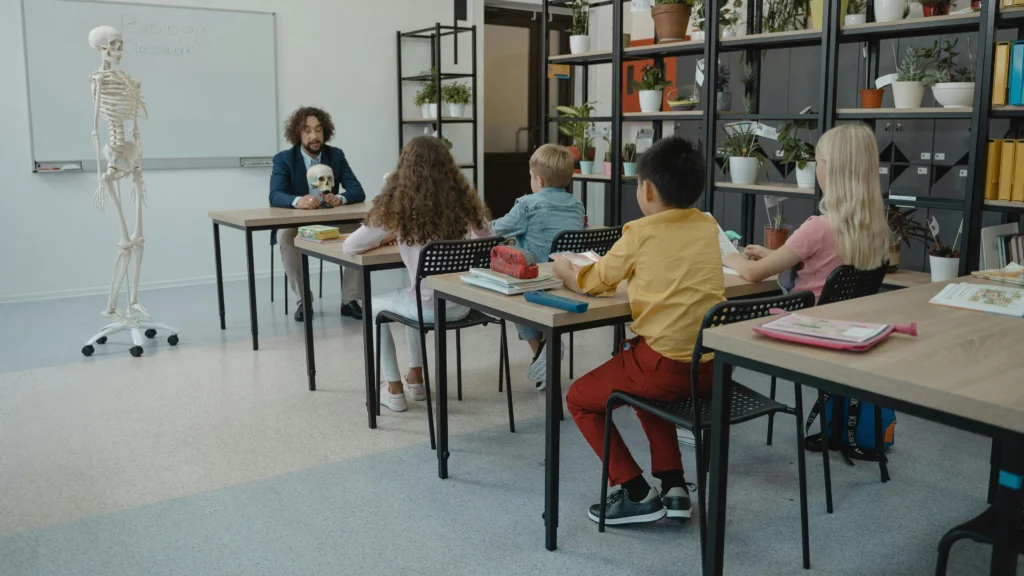
As we move through 2026, the concept of the “smart classroom” is undergoing a radical transformation. For the past decade, innovation was defined by the transition from analog whiteboards to interactive flat panels. Today, the conversation has shifted. The most significant classroom AV future trends are no longer about the hardware you can see on the wall, but the invisible intelligence managing the environment. We are entering the era of the “Hyper-Aware Classroom”—a space that uses sensors, artificial intelligence, and networked data to adapt to the needs of teachers and students in real-time.
In this new landscape, the focus is on reducing the “technical friction” that often plagues educators. Instead of a teacher spending the first five minutes of a lesson troubleshooting a dongle or adjusting microphone levels, the room itself anticipates the start of the session. By understanding the current state of Smart Classroom Components, we can better appreciate how these individual parts are now being woven into a singular, automated fabric.
AI-Driven Classroom Orchestration and Automation
Artificial Intelligence is the primary engine driving 2026’s AV evolution. However, this isn’t the generative AI used for writing essays; it is “System AI” designed for environmental orchestration. One of the most practical applications is automated scene management. Through the use of PIR (Passive Infrared) sensors and computer vision, a classroom can detect when a teacher enters. The lights adjust to a “Presentation Mode,” the interactive display wakes from sleep, and the audio system performs a rapid self-calibration based on the room’s current occupancy.
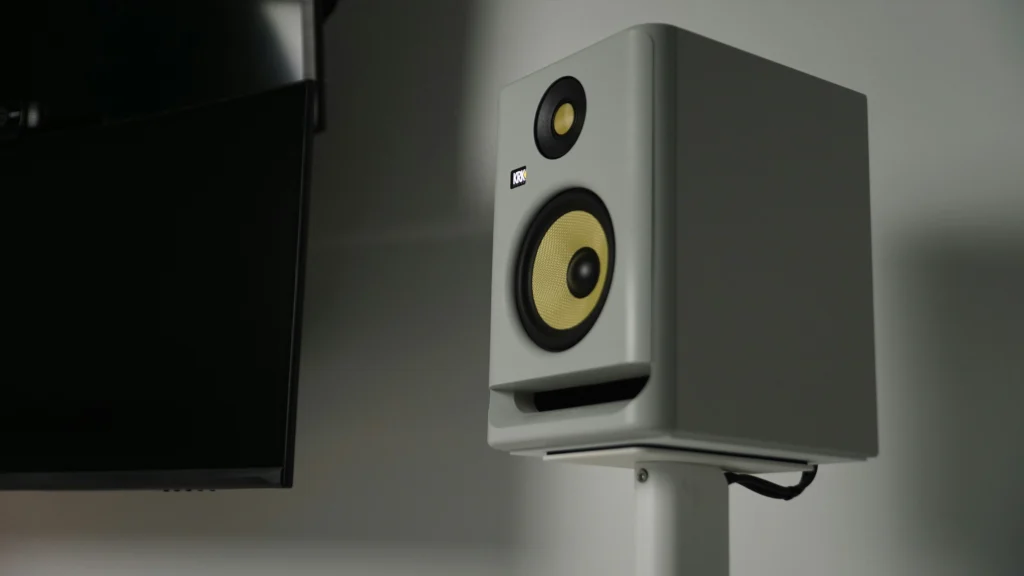
This automation extends to the acoustic environment. AI-driven “Voice Lift” technology now uses beamforming microphone arrays to identify the teacher’s location and amplify their voice only in the zones where it is needed. This prevents the “feedback loops” common in older systems and ensures that a teacher can speak at a natural conversational volume without straining. By removing the need for a wearable lanyard microphone, schools are seeing higher adoption rates because the technology requires zero effort from the user.
These intelligent systems also act as a proactive maintenance layer. In the past, an IT team wouldn’t know a screen was flickering until a teacher filed a ticket. Today, AI monitoring tools analyze the “heartbeat” of every device on the network. If a component shows signs of thermal stress or a cooling fan starts to fail, the system alerts the technical team before the device actually breaks. This shift toward predictive care is a major component of a modern AV Maintenance Checklist.
The Transition from Matrix Switchers to AVoIP
Perhaps the most technical yet impactful shift in classroom AV future trends is the move to AV over IP (AVoIP). For decades, classroom video was distributed via physical matrix switchers and long runs of HDMI or HDBaseT cabling. These systems were rigid; if you had an 8×8 switcher, you could only ever have eight inputs and eight outputs. If a school wanted to add a ninth camera or an additional display, they often had to replace the entire expensive core of the system.
AVoIP replaces this hardware-centric model with a software-defined one. By converting audio and video signals into data packets that travel over a standard 1Gbps or 10Gbps Ethernet network, the classroom becomes infinitely scalable. Any network jack in the building can potentially become an input or an output. This allows a school to broadcast a lecture from the chemistry lab to every other screen in the building with a single click, without needing dedicated “broadcast” wiring.
The benefits of this transition are most evident when schools perform a Classroom Network Setup. Instead of managing separate “AV cables” and “Data cables,” IT departments now manage a unified converged network. This not only reduces the cost of raw materials during construction but also allows for centralized management of every pixel being displayed across an entire campus. In 2026, the network is no longer a support feature; it is the central nervous system of the classroom’s visual and auditory experience.
Edge Computing and the Decline of Centralized Racks
As classroom systems become more complex, the demand for processing power has skyrocketed. Traditionally, this meant large, noisy equipment racks tucked away in closets or under desks. However, the future of classroom AV is moving toward “Edge Computing.” This involves placing high-performance, compact processing units—often the size of a smartphone—directly behind the display or integrated into the mounting bracket.
These edge devices handle the heavy lifting of AI video processing, 4K video decoding, and network security locally. This reduces “latency”—the tiny delay between a teacher touching a screen and the digital ink appearing. In a world of interactive learning, even a 50-millisecond delay can feel sluggish and unnatural. By processing data at the “edge” of the network, classrooms achieve a tactile responsiveness that mimics traditional physical tools.
| Technology | Traditional Approach (Pre-2024) | Future Trend (2026+) |
| Video Distribution | Fixed Matrix Switchers (HDMI) | AVoIP (Network Based) |
| Audio Capture | Lapel/Handheld Microphones | Beamforming Ceiling Arrays |
| Control Logic | Manual Touch Panels | AI-Driven Automation |
| Maintenance | Reactive (Fix when broken) | Predictive (AI Monitoring) |
Spatial Audio and the “Student-Centric” Soundstage
Sound is often the “forgotten” half of the AV equation, but 2026 is seeing a massive reinvestment in classroom acoustics. The trend is moving toward “Spatial Audio” for education. In a hybrid classroom—where half the students are physically present and half are remote—spatial audio ensures that the voice of a remote student actually sounds like it is coming from the direction of the screen they are displayed on.
This directional audio cues the students in the physical room to look toward the correct visual source, mimicking the natural flow of human conversation. When combined with intelligent microphone placement, this creates a “transparent” communication loop. For administrators looking to modernize their soundscapes, following a Classroom AV Buying Guide that prioritizes networked audio protocols like Dante or AES67 is becoming a non-negotiable requirement for future-proofing.
Computer Vision and Engagement Analytics
One of the most debated yet transformative classroom AV future trends is the integration of computer vision (CV). In 2026, high-definition cameras are no longer just for recording lectures; they are functioning as sophisticated data sensors. By utilizing AI-powered skeletal tracking and facial expression analysis, these systems can provide teachers with real-time “engagement heatmaps.”
If a significant portion of the class shows signs of confusion or disengagement—detected through slumped posture or lack of eye contact with the primary display—the system can subtly alert the teacher via a haptic wearable or a small notification on their digital podium. This allows for immediate pedagogical adjustment. For schools concerned about the physical setup of these advanced sensors, referring to the Smart Classroom Setup Checklist ensures that camera placement is optimized for data accuracy without being intrusive.
However, the rise of engagement analytics brings significant ethical responsibilities. Modern AV systems are moving toward “Privacy-by-Design,” where the AI processes the visual data locally (at the edge) and only sends anonymous metadata to the cloud. This ensures that while the school gains insights into classroom dynamics, the individual identities of students remain protected.
The Rise of the “Invisible” Control System
The era of the bulky, complex touch panel on the wall is coming to an end. We are seeing a move toward “Zero-UI” environments. In these rooms, the control system is entirely automated through a combination of IoT sensors and voice recognition. A teacher can simply say, “Start Chemistry Lab,” and the room responds by lowering the blackout shades, turning on the lab’s specialized task lighting, and launching the required simulation on the Touchscreen Interactive Board.
This level of automation is made possible by the “Internet of Things” (IoT). In a 2026 smart classroom, every piece of hardware—from the air conditioning unit to the motorized window blinds—is a networked device. These components communicate via low-latency protocols, allowing the classroom to maintain a “Goldilocks Zone” for learning: perfect CO2 levels, optimal lighting temperature, and a crystal-clear acoustic environment, all without the teacher ever touching a button.
Advanced Visuals: Transparent OLED and MicroLED
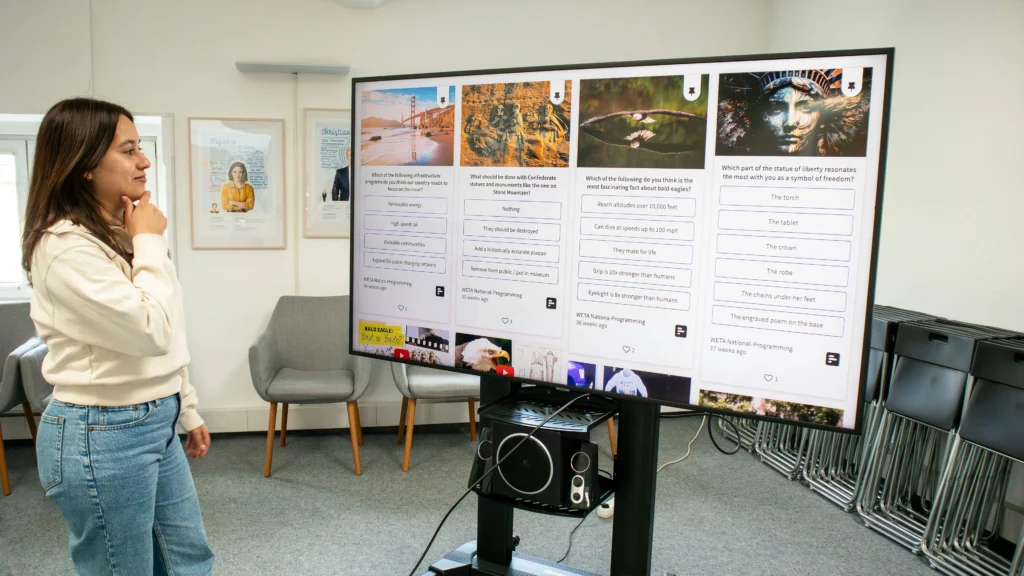
While the 4K interactive flat panel is the current standard, the next frontier in classroom AV future trends involves the displays themselves becoming part of the architectural glass. Transparent OLED (T-OLED) technology allows windows to be converted into interactive displays. This is particularly useful in science labs or maker spaces where a teacher can display digital instructions or safety data over a physical experiment happening behind the glass.
For larger spaces, MicroLED is emerging as the successor to traditional projection and large-format LCDs. Unlike traditional screens, MicroLED is modular, meaning you can build a display of any size or shape by snapping “tiles” together. These displays offer infinite contrast and extreme brightness, making them perfect for sun-drenched “glass classrooms” where even the best Classroom Projectors struggle to maintain visibility.
[Table: Comparison of Display Technologies for 2026 Classrooms]
| Feature | Interactive Flat Panel (Standard) | Transparent OLED (Emerging) | MicroLED (High-End) |
| Visibility | Excellent | Moderate (Best for Overlays) | Unbeatable (High Brightness) |
| Interactivity | High (Integrated) | High (Overlay Required) | High (Modular Sensors) |
| Space Impact | Wall-Mounted / Fixed | Minimal (Integrated in Glass) | Modular / Customizable |
| Ideal Use Case | K-12 Classrooms | Labs & Creative Studios | Auditoriums & Entry Halls |
Automated Environmental Syncing
Future classrooms are also tackling the “afternoon slump” through Circadian Rhythm Lighting. Research has shown that the color temperature of light significantly affects student focus and mood. New AV control systems are now being integrated with smart lighting that mimics the progression of natural sunlight throughout the school day.
In the morning, the system provides “cool” blue-toned light to increase alertness. During a high-stakes exam, the room might transition to a neutral, focused light. During a quiet reading period or a wind-down session, the room shifts to “warm” amber tones. This environmental syncing is part of a broader trend toward “Wellness-Focused AV,” where the technology serves the biological needs of the learners just as much as their instructional needs.
This level of integration requires a sophisticated understanding of how hardware communicates. Schools looking to deploy these systems must be careful not to fall into the trap of Smart Classroom Adoption Problems, which often occur when the technology is too complex for the average user. The goal of the 2026 “Invisible UI” is to ensure that while the technology is doing more, the teacher is doing less.
Sustainable EdTech: The Push for Energy-Neutral AV
As global focus shifts toward environmental responsibility, one of the most prominent classroom AV future trends is the demand for sustainable and energy-efficient hardware. Educational institutions are no longer just looking at performance; they are evaluating the carbon footprint of their technology. In 2026, manufacturers are responding with “Energy-Neutral” displays and projectors that consume significantly less power and are built using recycled materials.
We are seeing a move away from the “disposable” tech cycle. Future-ready hardware is designed for modularity, allowing IT departments to upgrade internal processors (like an OPS unit) without discarding the entire 86-inch glass panel. This approach significantly reduces electronic waste. For schools looking to align their technology with green initiatives, maintaining a rigorous AV Maintenance Checklist is essential to extending the life of current assets and delaying the need for new, resource-intensive replacements.
Security and Privacy in the Connected Classroom
With the integration of AVoIP and AI-driven sensors, the classroom has become a significant node on the school’s data network. This connectivity brings new risks. Cybersecurity is now a foundational element of classroom AV design. In 2026, we are seeing the implementation of “Zero Trust” architectures for AV hardware, ensuring that every camera, microphone, and display is authenticated and encrypted to prevent unauthorized access.
The use of AI cameras for engagement analytics has also led to the development of “Privacy-First” hardware. These devices process visual information locally and only transmit anonymized data—such as a “75% attention score”—rather than raw video feeds of students. This ensures that the benefits of Ultimate Lecture Recording Guide and analytics can be realized without compromising the safety or identity of the learners.
Budgeting for Disruption: Strategic Financial Planning
The traditional “buy and replace” budget model is failing to keep up with the pace of 2026’s classroom AV future trends. Forward-thinking districts are moving toward “AV-as-a-Service” (AVaaS) or subscription-based procurement. This model allows schools to pay a monthly fee for their classroom technology, which includes hardware, software updates, and managed support. This shifts the financial burden from a massive capital expenditure (CapEx) to a predictable operational expense (OpEx).
By smoothing out the costs, schools can ensure they always have access to the latest AI tools and AVoIP infrastructure without waiting for a once-a-decade bond measure. Navigating these new financial waters requires a robust Smart Classroom Budget Planning Guide to ensure that funds are allocated not just for the “shiny” hardware, but for the essential software and training that make the hardware valuable.
Final Vision Summary: The Classroom of 2026 and Beyond
The future of classroom AV is defined by three words: Integrated, Intelligent, and Invisible. We are moving toward a world where technology doesn’t demand a teacher’s attention but instead provides them with the data and environmental control to teach more effectively. From the modular brilliance of MicroLED to the silent orchestration of AVoIP, the goal is to create a space where every student, regardless of their physical location or learning style, is fully seen and heard.
Frequently Asked Questions (FAQ)

1. Will AI replace the need for IT staff in schools?
No. While AI will handle routine tasks like predictive maintenance and basic troubleshooting, the need for skilled IT professionals will increase. They will shift from “fixing broken cables” to “managing intelligent data ecosystems” and ensuring the cybersecurity of the classroom network.
2. Is AVoIP more expensive than traditional HDMI cabling?
Initially, the networking hardware (10Gb switches) may have a higher upfront cost. However, the scalability and reduced labor costs—since you are using standard Ethernet rather than proprietary AV cables—typically lead to a lower total cost of ownership over a 5-year period.
3. How do we ensure older teachers don’t feel “left behind” by these trends?
The key is the move toward “Zero-UI.” Future trends are focusing on automation so that teachers don’t have to “learn” new software. If the room reacts automatically to their presence, there is no learning curve to overcome.
4. Are transparent displays actually useful for teaching?
Transparent OLEDs are highly effective in specialized environments like science labs and technical workshops. They allow students to see digital overlays on top of physical objects, creating a “mixed reality” experience without the need for bulky VR headsets.
5. What is the first step a school should take to prepare for these trends?
The first step is upgrading the network infrastructure. Without a high-bandwidth, low-latency backbone, none of the AI, AVoIP, or IoT features can function. Ensuring your network is ready is the single most important “future-proofing” move you can make.